

Black lines on teeth
Black lines on teeth are the first aesthetic problem patients notice about their teeth. These lines can sometimes appear as very fine lines, scattered black spots, or darker and more pronounced lines.
Black lines on teeth initially bring tooth decay to mind. However, not every black line indicates decay. It is essential to assess whether the line is on the surface of the tooth, at the gum line, or whether it extends into the tooth. This is because two black lines with the same appearance may require completely different treatments.
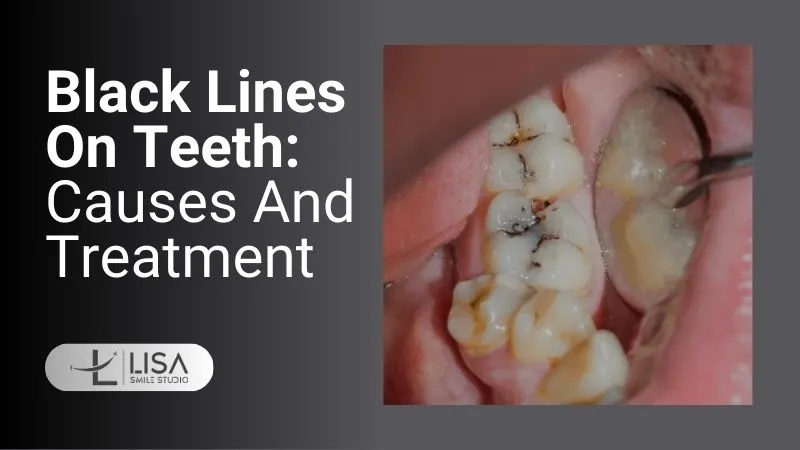
Black lines on teeth kids
Black lines seen in children often worry parents. The most common situation is discolouration in the form of thin black bands at the gum line. This is often associated with chromogenic bacteria. These bacteria cause black lines by forming pigment on the tooth surface. These lines are not cavities and do not damage the tooth enamel. However, if left uncleaned for a long time, they can increase plaque build-up. Children's tooth enamel is thinner than that of adults. For this reason, black lines are more noticeable in children. They can be controlled with regular professional cleaning. Professional cleaning can be performed on children after the age of 12.
What types of black lines on teeth?
Black lines can appear in different areas. Lines appearing as a straight line at the gum line are mostly related to tartar. Dark lines seen between teeth are usually the result of plaque build-up. Black lines seen in the deep grooves on the chewing surfaces of molars are areas most prone to decay. In some cases, black lines may also appear as a natural feature of the enamel structure or as a result of orthodontic treatment.
Why do black lines appear on teeth?
The oral environment is highly conducive to bacterial growth. Food and drink consumed throughout the day adhere to the tooth surface. If these deposits are not cleaned regularly, plaque forms. Over time, plaque hardens and turns into tartar. Dental calculus, due to its porous structure, easily absorbs coloured substances. This results in the formation of black or dark brown lines. Sometimes, mineral loss in the enamel structure or the onset of decay manifests itself as black lines.
Plaque and tartar build up
Plaque is a soft film that forms on teeth every day. Plaque forms when oral hygiene is inadequate. Plaque turns into tartar due to insufficient care. Tartar accumulates particularly along the gum line and between teeth. Black lines are usually hard and cannot be removed with a toothbrush. Tartar also paves the way for gum disease. Therefore, regular tartar removal is very important for oral health.
Dental cavities
Early-stage decay appears as thin black lines or dark shadows. The grooves on the chewing surfaces of molars are the areas where decay most commonly begins. If left untreated, the lines deepen over time and affect a larger portion of the tooth. With early intervention, only a small filling is required.
Beverages and drinks
Drinks such as tea, coffee, cola, and red wine contain colour pigments. These pigments adhere to the surface of the teeth. Frequent consumption of these drinks throughout the day can cause black lines on the teeth over time, even with regular oral care. Smoking also increases this effect. Rinsing the mouth with water after drinking and regular cleaning can reduce these risks.
Dental fluorosis
Dental fluorosis occurs as a result of excessive fluoride intake during the development of teeth. These discolorations are not on the surface of the teeth, but within the enamel structure. Therefore, they cannot be removed with conventional teeth cleaning. Treatment usually involves cosmetic approaches.
How are black lines on teeth diagnosed?
The dentist assesses the hardness of the line, its spread, and its relationship with the tooth surface. Where necessary, the internal structure of the tooth is examined using X-rays. This clarifies whether the black line is a stain, tartar, or decay. Correct diagnosis prevents incorrect treatment.
How to avoid black lines on teeth
The fundamental way to prevent black lines is effective oral hygiene. Brushing teeth using the correct technique, using dental floss, and regular check-ups make a big difference. Reducing the frequency of consumption of coloured drinks and following the dentist's recommendations are also important. Preventive care is always easier than treatment.
How to remove black lines on teeth at home
Black stains on teeth can be cleaned at home if they are superficial. However, if they have turned into tartar, they cannot be cleaned at home. Attempting to scrape the teeth can damage the enamel. Hard brushing or abrasive products can damage the enamel. If the lines do not disappear after regular care, professional evaluation is essential.
Safe methods you can use at home include:
- Regular tooth brushing and flossing.
- Gently brushing your teeth with a mixture of bicarbonate of soda and water.Applying this method once every 10 days is better for protecting tooth enamel.
Practices to avoid:
- Gargling with hydrogen peroxide is not suitable for dental health.
- Tartar should not be cleaned with toothpicks, vinegar, or lemon.
- Activated charcoal and whitening products should not be used every day.
When should a dentist be consulted?
If black lines have been present for a long time, are becoming darker over time, or are accompanied by sensitivity, you should consult your dentist. Lines at the gum line and in the grooves of the teeth should not be ignored. Early intervention prevents bigger problems.
What are aftercare and risk of recurrence?
The aftercare process following the treatment of black lines is just as important as the treatment itself. If oral hygiene is inadequate after professional cleaning, filling, or other intervention, discolouration may reappear in the same areas. This is because the tooth surface becomes susceptible to plaque build-up again after treatment. The gum line and interdental spaces, in particular, can accumulate plaque and tartar again within a short time if not cleaned regularly.
Some individuals are structurally more prone to tartar formation. Saliva content, oral flora, and dietary habits influence this condition. In these individuals, black lines may return more quickly. Therefore, the same check-up interval is not suitable for everyone. While cleaning every six months may be sufficient for some patients, others may require more frequent professional cleaning. Regular dental check-ups ensure that this risk is detected early and kept under control.
FAQs about black lines on teeth
Can black lines reappear after treatment?
Yes, black lines may reappear after treatment. If the underlying cause is plaque build-up, tartar formation or consumption of heavily pigmented beverages, and these factors persist, the discolouration will return over time. Treatment eliminates the current problem, but preventing recurrence depends on the patient's daily care habits. Therefore, it is very important to follow the recommendations after treatment.
How to remove black lines in pits of molars
The deep pits and grooves on the chewing surfaces of the molars are the areas where black lines are most commonly seen. If these lines are only due to superficial staining, they can be largely removed with professional teeth cleaning. However, if the lines have penetrated the tooth enamel or if there is a cavity in its early stages, cleaning alone will not suffice. In this case, fillings, fissure sealants, or protective treatments may be necessary. Early intervention prevents the need for more extensive procedures.
How to remove black lines on teeth near gums
Black lines forming along the gum line are mostly related to tartar build-up. Brushing in this area is often insufficient, and plaque quickly hardens into tartar. Tartar cannot be cleaned at home. Unless professional tartar removal is performed, these lines become permanent and can negatively affect gum health over time. Regular cleaning and proper brushing technique can reduce the recurrence of these lines in this area.
Are black lines on teeth a sign of decay?
Black lines on teeth do not always indicate decay. In some cases, they may simply be surface staining or tartar. However, dark lines seen on the chewing surfaces of teeth or between teeth may be an early sign of decay. The onset of decay does not usually cause pain, so it is not correct to make a decision based solely on appearance. A definitive assessment can only be made through clinical examination and, where necessary, X-rays.